

London City Living: Contemporary Design with Intelligent Lighting Control
Farringdon, London City | Gira KNX System | Carbon Integration
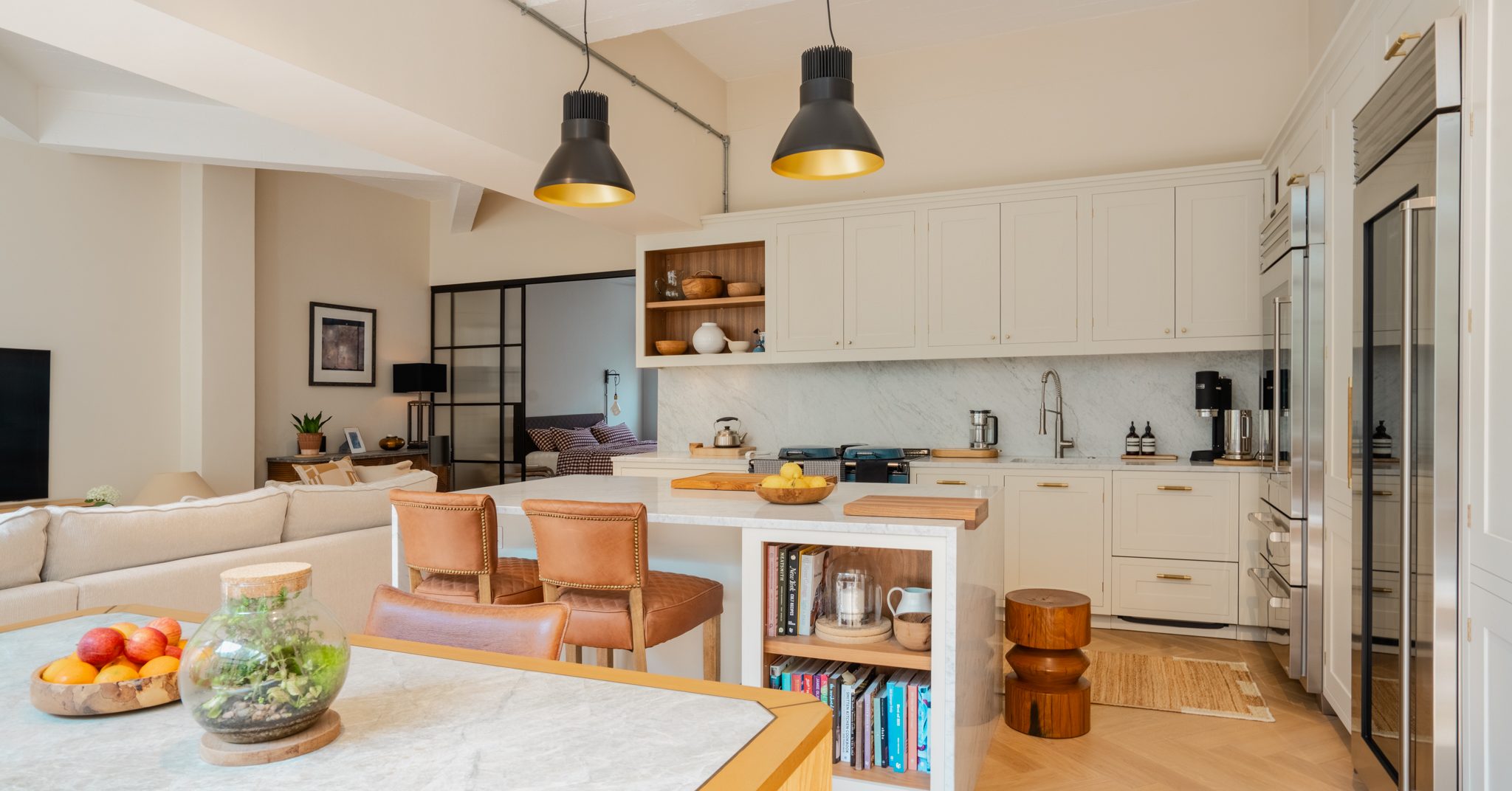
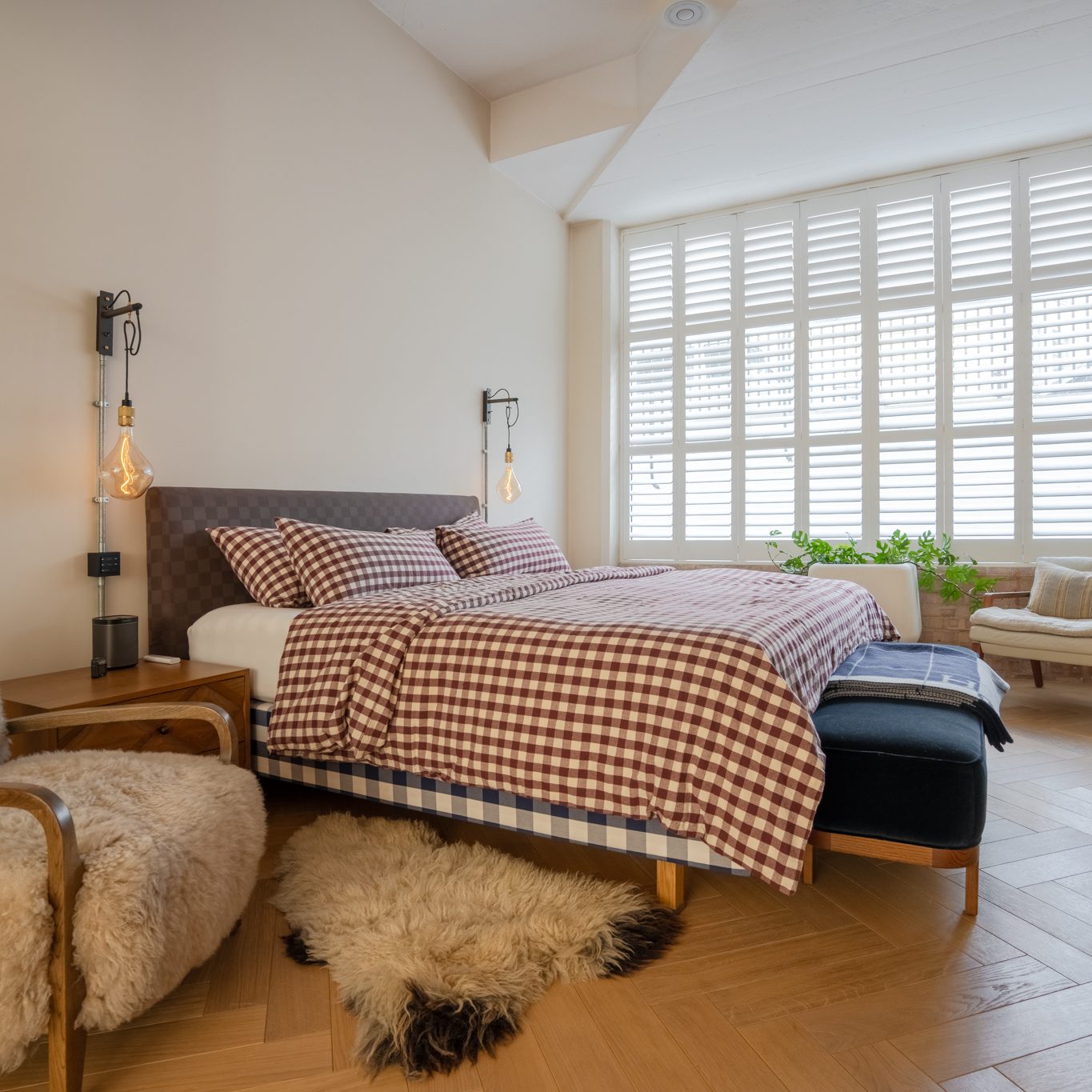
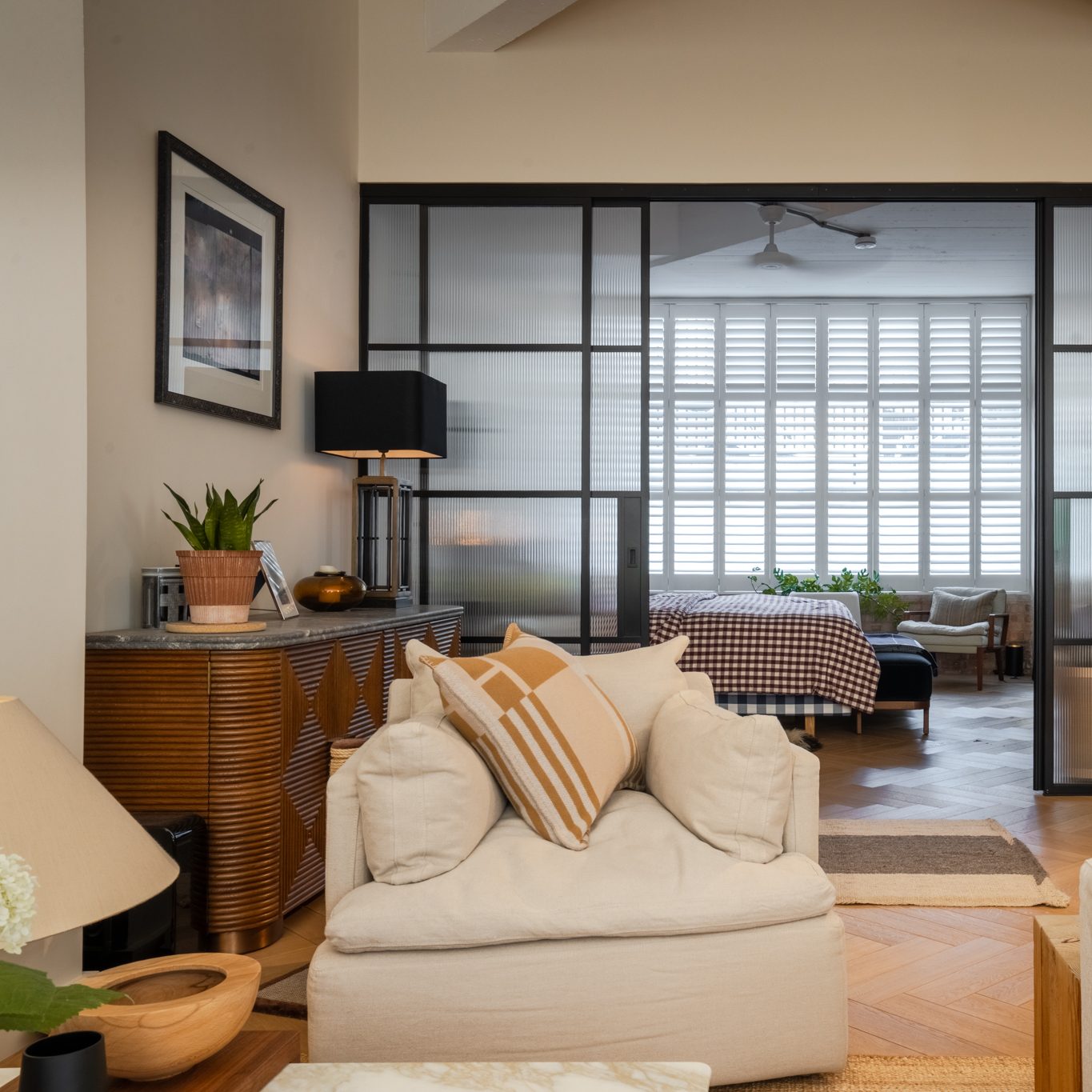
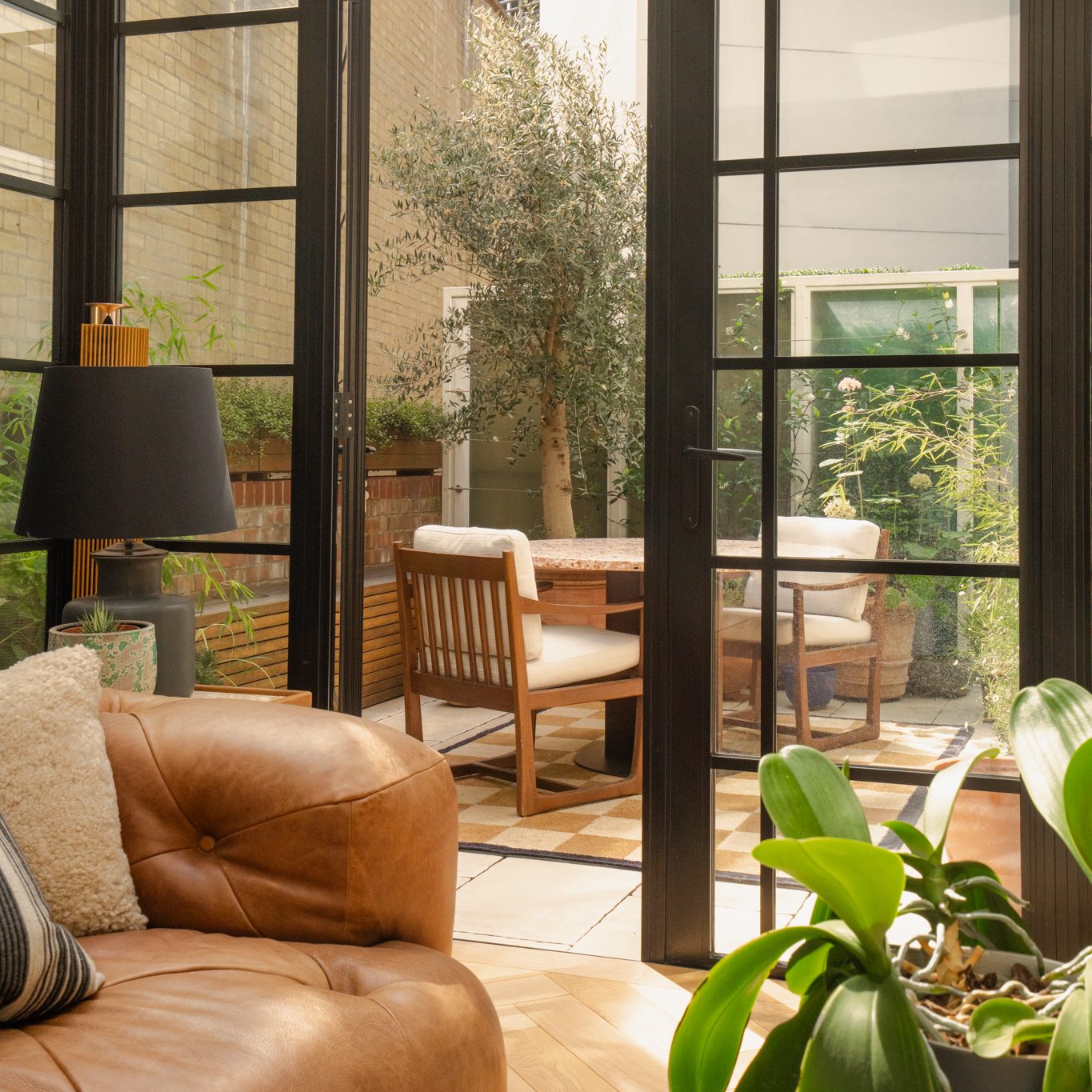
Located in Farringdon, in the heart of the City of London, this contemporary private apartment brings together a bright, open interior with carefully considered architectural design and material palette. High ceilings, full-height glazing and glass partitions create a sense of space and light, while a restrained palette of cream, tan and warm timber is balanced by strong black architectural details. Subtle industrial references nod to the building’s original use as a loading bay, bringing character to an otherwise refined and contemporary interior.
Designed around modern city living, the apartment combines considered finishes and generous living spaces with technology that is integrated naturally into the architecture. Working closely with Carbon Integration, the homeowners introduced a Gira KNX system to provide the intelligent infrastructure behind the apartment’s lighting control.


Intelligent Infrastructure, Working Behind the Scenes
KNX provides the underlying intelligence for the apartment, allowing the system to be programmed around the way the homeowners actually live. Rather than providing a series of connected switches, it creates a flexible framework through which lighting functions can be coordinated, adjusted and tailored to the routines and preferences of the people using the home. For this project, Carbon Integration programmed the Gira KNX system specifically around the apartment’s lighting requirements: individual lights can be controlled, grouped functions can be created and lighting levels can be assigned according to how each space is used. A press of a Gira Pushbutton Sensor 4 triggers the programmed lighting response, with the KNX system handling the logic behind the scenes.
This intelligence is deliberately kept behind the scenes. The homeowners do not need to interact with the complexity of the system; they simply use the controls in the way that feels most natural to them, while the programming manages the logic behind each interaction. That programming can also be refined as routines and preferences change, allowing the lighting automation to evolve with the way the home is used without altering the physical interfaces in the apartment.

Lighting Designed Around the Way the Home Is Used
Lighting was central to the way the KNX system was programmed, with Carbon Integration developing the lighting control strategy around the architecture, layout and everyday routines of the apartment. In the open-plan living areas, lighting was organised both by the area of the space and by the type of fitting, creating a flexible approach to control that reflects how the rooms are actually used.
Rather than treating the open-plan space as one single lighting zone, different areas can be controlled independently, while fittings of the same type can also be grouped together. Pendant lighting, for example, can be controlled separately from other lighting within the space, allowing the homeowners to adjust particular elements of the scheme without having to control every fitting at once.
This gives the homeowners greater control over both function and atmosphere, where brighter, more practical lighting can support everyday tasks and working, while pendant or other decorative lighting can be introduced or dimmed to create a softer setting for dining, relaxing or entertaining.

The KNX programming brings these different layers of control together, allowing multiple lighting functions to be accessed from a single interface. Rather than moving between conventional switches for different areas or fittings, the homeowners can control the lighting according to how they are using the open-plan space. A single Gira Pushbutton Sensor 4 can therefore provide access to an individual fitting, a room or area, or a group of fittings by type, with the KNX system handling the logic behind each input.
The same principle extends throughout the apartment, with the lighting control programmed around the requirements of each room and the routines of the homeowners. Importantly, the flexibility sits within the KNX programming rather than the physical interface. Functions can be refined, regrouped or adapted as the way the home is used changes, without altering the controls themselves. This allows the lighting to respond to different activities, moods and occasions while maintaining a consistent, familiar way of interacting with it.
It is this separation between the intelligence of the system and the simplicity of the interface that makes KNX particularly effective for this project. The homeowners can interact with the lighting through straightforward physical controls, while the programming behind them provides the flexibility to coordinate and adapt the lighting around everyday life.
Considered Control Points
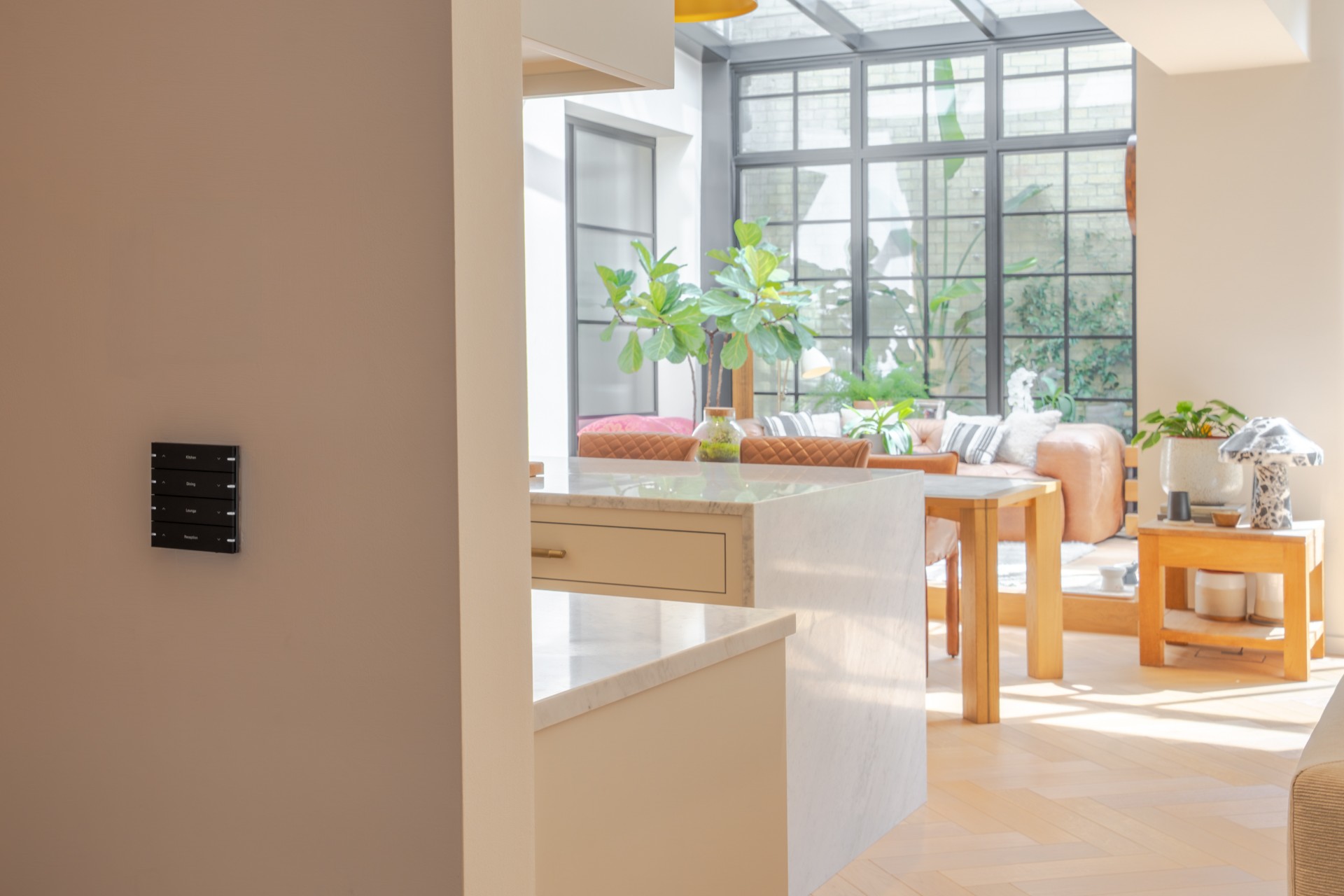
In a modern, minimalist interior, the control interface needs to do more than provide functionality. It needs to feel like part of the architecture. For this apartment, Gira Pushbutton Sensor 4 interfaces were selected for their clean lines, slim profile and understated, design-led appearance. The square format and matt black finish complement the apartment’s black architectural detailing, creating a crisp, contemporary addition to the walls without introducing visual clutter.
The Gira Pushbutton Sensor 4 also provides a way to bring substantial functionality into a deliberately minimalist interface. Four-gang Gira Pushbutton Sensor 4.95 and three-gang Gira Pushbutton Sensor 4.55 configurations provide up to eight and six functions respectively, allowing multiple lighting commands to be brought together within a single, compact control point. Rather than filling the walls with individual switches for different lights and areas, the homeowners have access to extensive lighting control through a streamlined interface that feels proportionate to the modern interior.

The Pushbutton Sensor 4.95
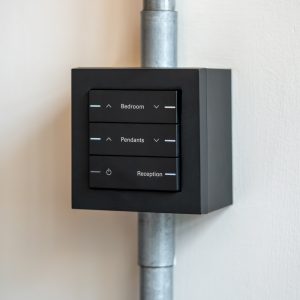
The Pushbutton Sensor 4.55
This balance of functionality and form was particularly important within the open-plan living spaces, where the lighting has been carefully divided into different areas and fitting types. The Gira Pushbutton Sensor 4 interfaces allow these functions to be brought together without making the control points feel complicated or overly technical. Their slim, architectural profile keeps the technology visually quiet, while their tactile operation makes the system straightforward to use.

The Gira Pushbutton Sensor 4.95 provides a 95x95mm square profile, while the Gira Pushbutton Sensor 4.55 is paired with Gira frames and installation boxes to achieve the same 95x95mm visual footprint. This gives the controls a consistent architectural presence while allowing different configurations to be used according to the number of functions required in each location. The result is a cohesive and considered approach to control throughout the apartment, rather than a collection of individual technology points.
The installation was also adapted to the character of the property. In areas where the apartment’s industrial references are more pronounced, including locations around exposed pipework, the Gira Pushbutton Sensor 4.55 controls were installed using Gira custom flush-mounted installation boxes. This provided a neat, integrated solution for more unconventional locations, allowing the controls to follow the architecture and detailing of the space rather than requiring a standard installation.
The result is a control solution that feels integrated into the design of the apartment. Extensive functionality is condensed into a compact, architectural form, allowing the technology to remain visually restrained while still providing intuitive access to the lighting throughout the home. The controls feel considered rather than technical, supporting the clean lines and contemporary character of the interior while ensuring that while keeping lighting control straightforward and accessible.

Individual Control, Clearly Defined
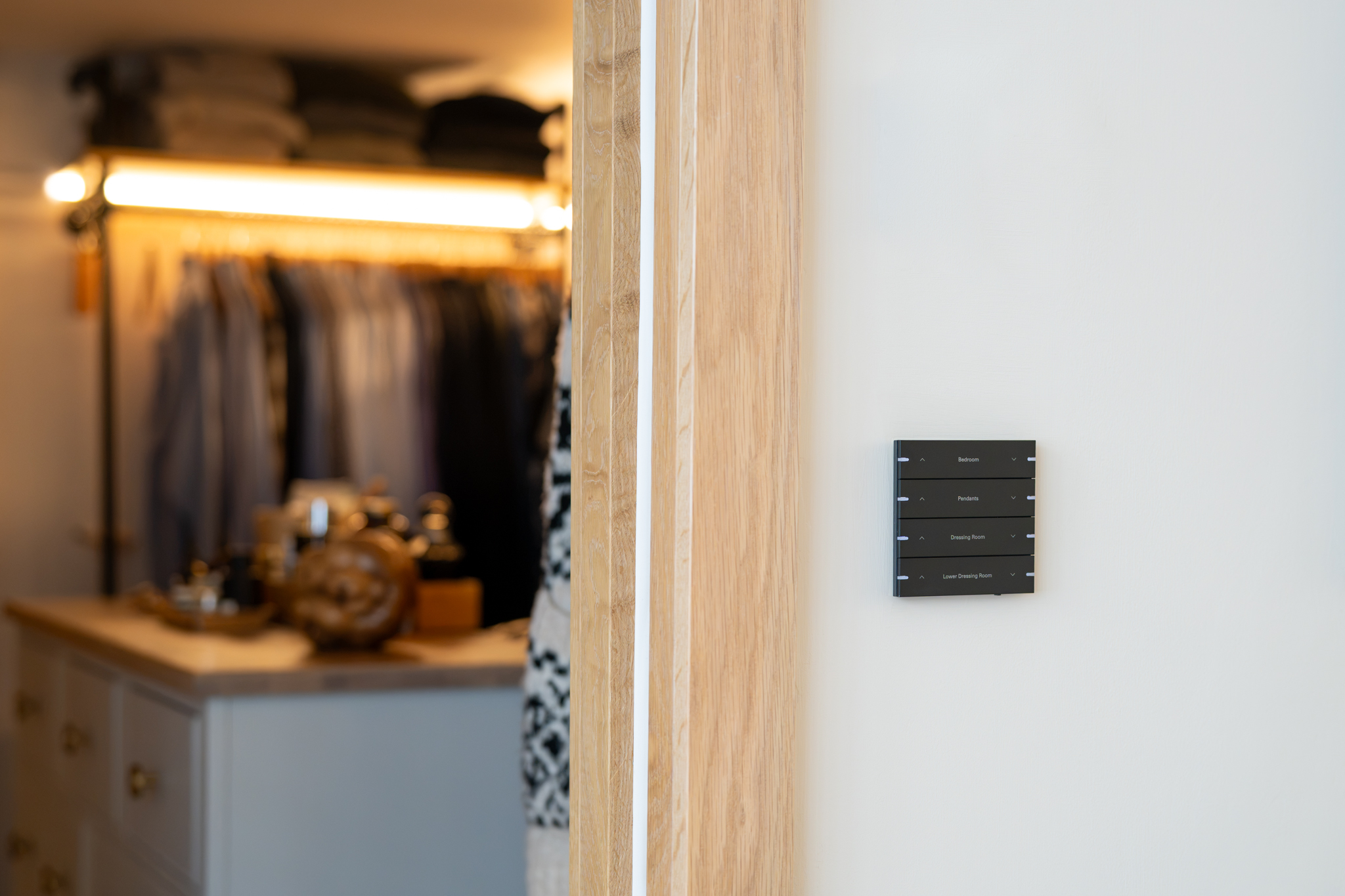
With multiple lighting functions brought together on each Gira Pushbutton Sensor 4, clear identification was an important part of the interface specification. Each Gira Pushbutton Sensor 4 was individually configured and inscribed using Gira’s Configurator, with each one personalised to its location and the specific functions assigned to it, reflecting both the lighting requirements of the space and the way it is used.
Text and icons were selected to identify the lighting functions controlled by each button, providing an immediate visual reference for the homeowners. This makes it possible to access multiple functions from one streamlined interface while keeping operation intuitive. The inscriptions also contribute to the overall aesthetic of the controls; applied directly to the finished rockers, the combination of text and symbols provides clarity without compromising the appearance of the interfaces or the overall design ethos of the apartment.
By clearly identifying each function, the bespoke inscriptions make a multi-function interface immediately intuitive to use while retaining the familiarity of a Pushbutton control. Together, the text and icons make the multi-function interfaces clear and straightforward to use, while retaining the clean appearance of the finished rockers.

Control Through the Gira Smart Home App
Alongside the tactile control provided by the wall-mounted Gira Pushbutton Sensor 4 interfaces, the Gira Smart Home App provides a convenient digital interface to the same KNX lighting system. For the homeowners, this means the lighting can be managed through a device that is already part of modern life. Smartphones are familiar, always close at hand and instinctive to use, making the technology feel less like an additional system to learn and more like a natural extension of the way they already interact with their home.
While the wall-mounted Gira Pushbutton Sensor 4 provides an immediate, tactile point of interaction, the app allows lighting to be viewed and adjusted from wherever the homeowner is within the apartment, without needing to be at a particular control point. This is particularly useful within the open-plan living areas, where several lighting groups and fitting types have been programmed independently. The app provides another way to access those functions, complementing both the room- and fitting-based lighting control.
The Gira S1 also provides secure remote access to the KNX system, allowing the homeowners to allowing the homeowners to access their lighting system when away from the property. This adds another layer of convenience to the system, giving them the ability to check or manage their lighting remotely while maintaining secure access to the home.
Together, the Gira Pushbutton Sensor 4 interfaces, Gira Smart Home App and Gira S1 provide complementary ways to interact with the lighting: tactile, dedicated controls integrated into the architecture; convenient digital control through technology the homeowners already use every day; and secure remote access when they are away from home. All three connect back to the same KNX infrastructure, creating a consistent experience across the different ways the homeowners interact with their lighting.
Technology That Supports the Design
A key consideration throughout the project was ensuring that technology enhanced the experience of the apartment without compromising its design. Carbon Integration’s approach was centred on making the technology work around the home, rather than allowing the technology to dictate how the home is used. The Gira KNX system provides the intelligence behind the lighting, while the Gira Pushbutton Sensor 4 interfaces translate that complexity into an intuitive interaction that feels natural within the interior.
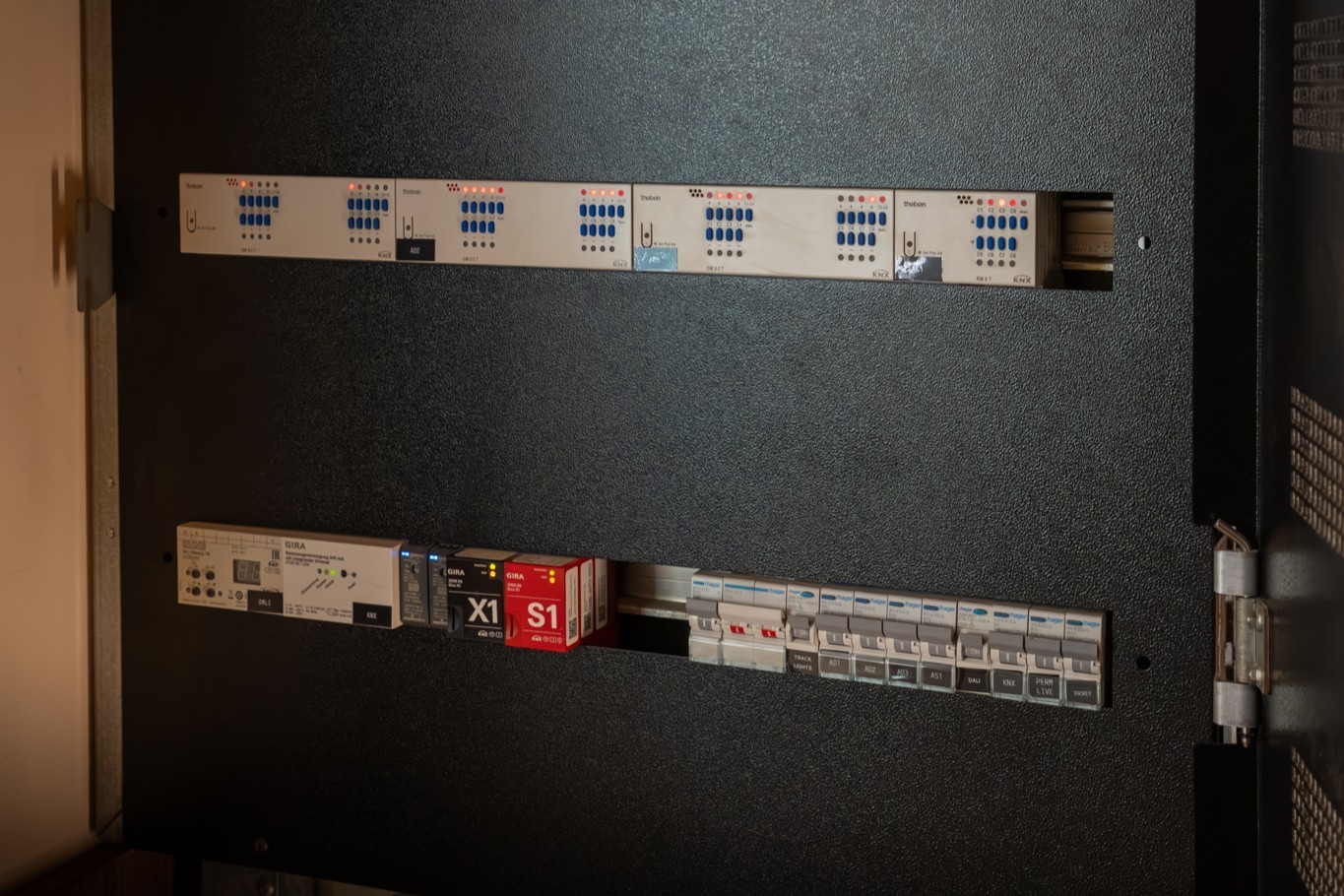
This balance between capability and simplicity runs throughout the project. Behind the scenes, the lighting can be programmed around different rooms, areas, fitting types and routines, giving the homeowners the flexibility to shape how their home feels throughout the day. At the point of interaction, however, this is simplified to the press of a button, with clearly inscribed functions making the multi-function interface straightforward to understand, or within the Gira Smart Home App.
For Carbon Integration, this meant creating a system that was responsive to the way the apartment is actually lived in, rather than adding technology for its own sake. The lighting can adapt to different activities and occasions, while the physical controls remain consistent, considered and easy to use. As routines and preferences evolve, the programming can also be refined without changing the carefully integrated hardware.
The technology therefore sits comfortably within the architecture of the apartment. From the slim, matt black Gira Pushbutton Sensor 4 interfaces and bespoke inscriptions to the KNX programming that connects them, every element has been considered as part of the overall interior rather than as a separate technological layer. The result is a home where intelligent lighting enhances comfort, atmosphere and everyday living, while the technology itself remains quietly in the background.
For this City of London apartment, the project demonstrates how intelligent technology can be integrated into a design-first interior with restraint and purpose. The lighting has been considered around the way the home is used, with the flexibility to respond to different rooms, areas, activities and times of day. At the same time, the controls themselves remain visually understated, with carefully selected finishes, compact multi-function interfaces and personalised inscriptions ensuring that technology feels like a natural part of the interior rather than an addition to it.
It is this balance between intelligence and simplicity that defines the approach. KNX provides the flexibility to create a lighting environment tailored to the homeowners, while Gira provides the interfaces through which that functionality is accessed. Carbon Integration brings the two together through considered programming and a control strategy developed specifically for the property, ensuring that the technology works seamlessly with the architecture, interior and everyday routines of the home.
Ultimately, the project shows that intelligent home technology does not need to be visually dominant or complicated to deliver a sophisticated experience. When the intelligence is carefully programmed and the interfaces are thoughtfully chosen, technology can quietly enhance comfort, atmosphere and everyday living, giving the homeowners greater control while allowing the character and design of the apartment to remain firmly at the forefront.
Carbon Integration
Carbon Integration is a UK-based smart building specialist delivering integrated technology solutions for high-end residential projects. Working closely with homeowners, Carbon Integration designs and commissions intelligent control systems that enhance comfort, convenience, energy efficiency, and everyday living through seamless smart home integration.
With expertise across KNX, lighting control, heating integration, automated shading, audio visual systems, and whole-home automation, Carbon Integration creates tailored solutions designed around the specific requirements and routines of each client. Their approach focuses on combining advanced technical performance with intuitive usability, ensuring technology integrates naturally within the architecture and interiors of the home.
Gira
Founded in 1905, Gira is a leading innovator in intelligent building technology, shaping the electronics sector with smart solutions for intelligent building control. Each innovative product we create is designed with people and their needs in mind, and people are at the heart of our product development process. With a commitment to quality, innovation, and usability, Gira continues to set standards in smart technology for modern living, offering a variety of intuitive, future-ready building control solutions. Visit our showroom at Wandsworth, the home of Gira in the UK, to discover our pioneering products and Smart Technology solutions.
Wandsworth world newsletter.
The Wandsworth Group
Ritchie House, Woking Business Park, Albert Drive, Sheerwater Woking, Surrey, GU21 5JY
Part of the Gira Family